In Collaboration with National University of Singapore
Founded in 1905 as a medical school, the National University of Singapore is Singapore’s flagship university, with 15 colleges, faculties and schools across three campuses. Its vision is to be a leading global university shaping the future, and its mission is to educate, inspire and transform, guided by the values of innovation, resilience, excellence, respect and integrity.
The question of how organisations build a workforce that lasts has moved to the centre of executive education. Artificial intelligence is reshaping how work gets done, while psychological safety, candour and organisational culture determine whether people stay and perform.
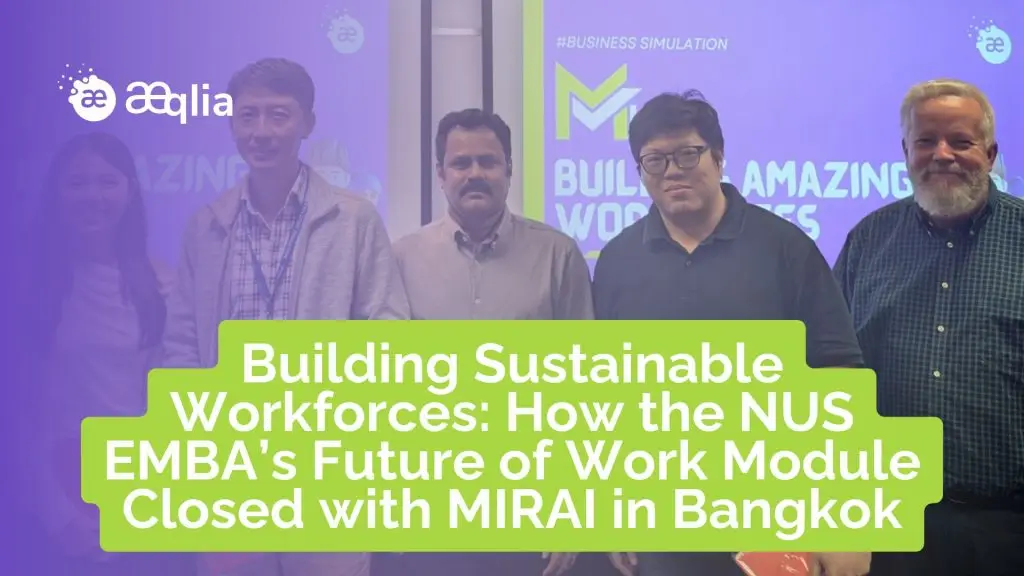
The Future of Work module in the NUS Executive MBA programme addresses that question directly. Taught by Adjunct Associate Professor Michael Jenkins, the module features an experiential component hosted partly in Bangkok, Thailand. It closed with AEQLIA’s MIRAI Business Simulation, putting the module’s learnings into action.
The module is led by Michael Jenkins, an expert in organisational resilience, compassionate leadership, humane and productive workplaces, and sustainable business leadership.
Its core themes examine how several forces combine to build a sustainable workforce:
In Bangkok, that thinking moved beyond the classroom. The experiential component incorporated regional company visits — among them CP Food and JLL — and local panel discussions with industry leaders, examining how organisations design workplaces and manage human capital for the next decade.
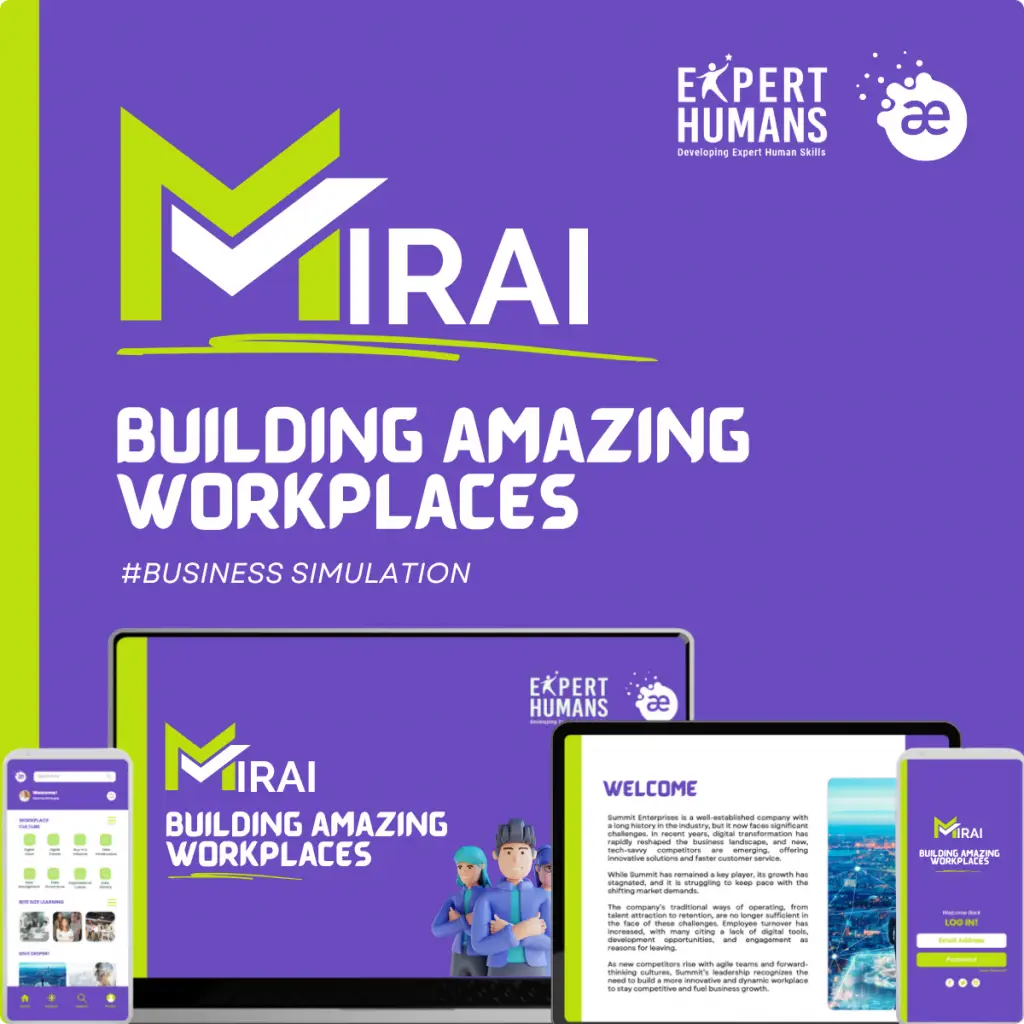
At the close of the programme was MIRAI, AEQLIA’s immersive business simulation focused on workplace culture and the employee lifecycle. MIRAI was developed by AEQLIA in collaboration with Michael Jenkins, built on the insights of his book, Toxic Humans: Combatting Poisonous Leadership in Boards and Organisations — meaning the same thinking that shaped the module also shaped the simulation that closed it.
Participants stepped into the leadership team of Summit Enterprises, a well-established fictitious company whose growth has stagnated as tech-savvy competitors emerge. Its traditional ways of operating are no longer sufficient, and turnover has risen, with employees citing a lack of digital tools, development opportunities and engagement.
Across a series of stages covering the full employee lifecycle, participants were required to make decisions on:
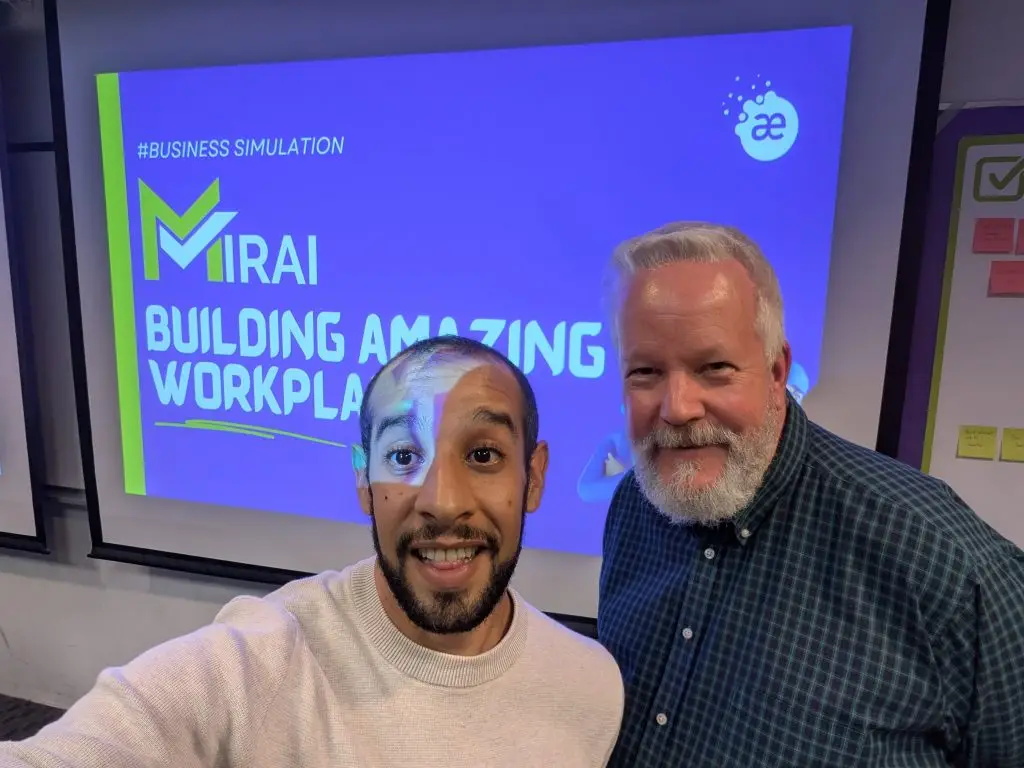
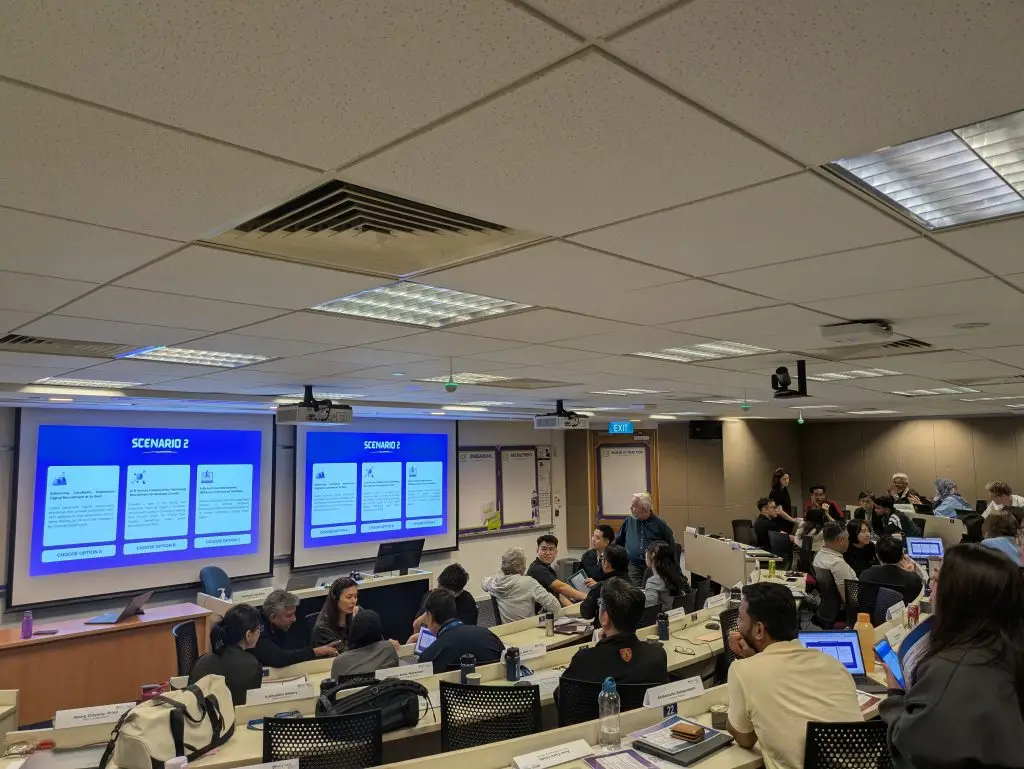
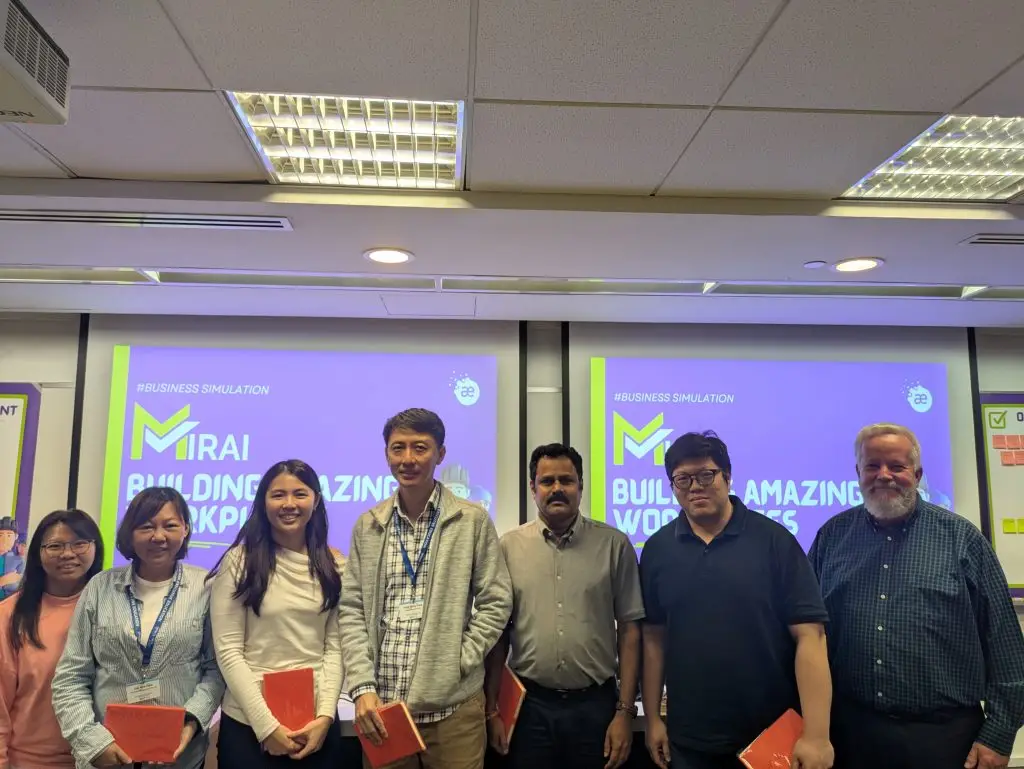
The simulation shifted the module’s themes from discussion into decision-making.
Participants experienced:
Because the scenario mirrors the pressures the module examines, the connection between theme and practice is immediate.
By closing the Future of Work module with MIRAI, the programme gave participants a setting to apply what the module had been examining.
The module reinforced a central idea: a sustainable workforce is not designed through policy alone, but through the everyday decisions leaders make about the people in their organisations.
You have questions about simulations or services? We’re here to help! Send us your inquiries, and our team will provide you with all the information you need.
© All Rights Reserved Aeqlia Pte Ltd 2026