
In Collaboration with Emeritus Executive Education
Emeritus is an online education company that partners with 80+ top-tier universities worldwide (Wharton, MIT, Columbia, Cambridge, and others) to deliver executive education, professional certificates, and degree programs — reaching over 500,000 learners globally across topics like leadership, AI, data science, and business management.
How do senior leaders make strong strategic decisions when the future is uncertain?
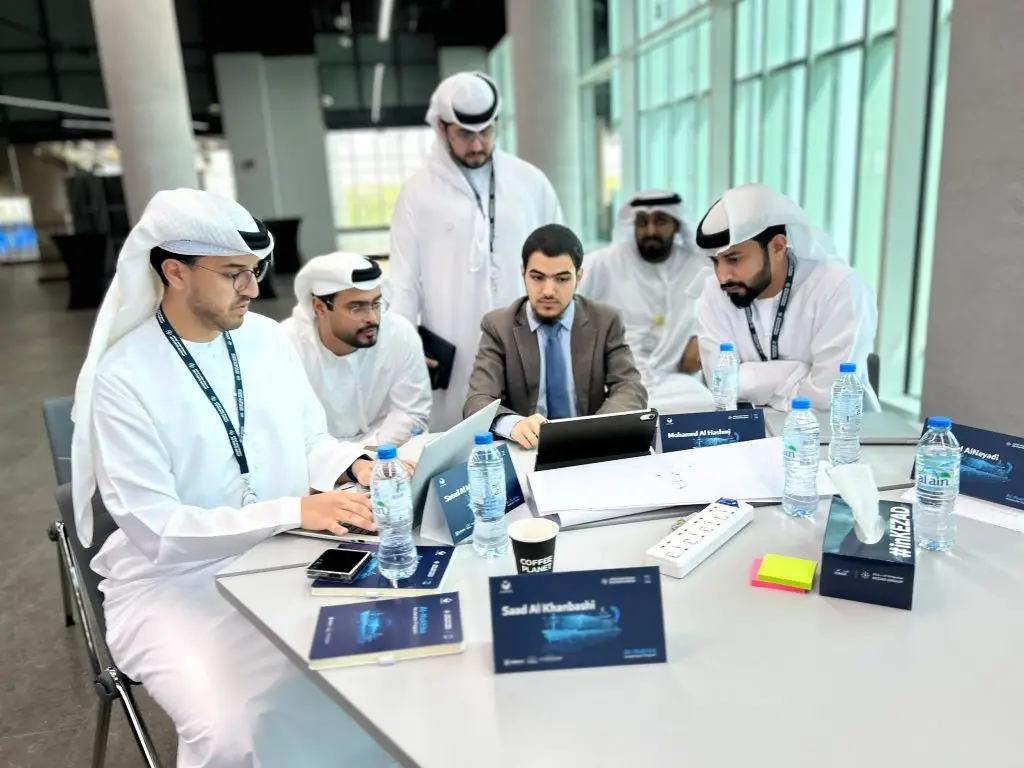
That was the challenge at the heart of a recent HORIZN Business Simulation delivered for senior leaders at AD Ports Group in Abu Dhabi, in collaboration with Emeritus Executive Education.
The session focused on strengthening leaders’ ability to look beyond immediate operational priorities, identify emerging shifts, and make more deliberate strategic choices about the future.
Leadership teams are often highly effective at managing what is happening today.
The greater challenge is creating enough distance from current priorities to ask:
What could materially change our business over the next three, five, or ten years?
During HORIZN, participants explored how changes across markets, technology, regulation, customer expectations, and the broader business environment can interact to create very different possible futures.
Rather than trying to predict one definitive future, leaders were challenged to recognise early signals of change, examine different possibilities, and consider what those developments could mean for their strategic priorities.
One of the central principles of strategic foresight is that the future is rarely linear.
Through the simulation, leaders worked with alternative future scenarios, considering how different combinations of trends, disruptions, and external forces could affect the organisation.
They then had to stress-test their strategic choices against those different futures.
Would today’s strategy remain relevant if the operating environment changed significantly?
Which assumptions might no longer hold?
Which investments would create resilience across several possible scenarios?
This shifts the leadership conversation away from simply asking, “What do we think will happen?” toward the more useful question:
“How prepared are we for what could happen?”
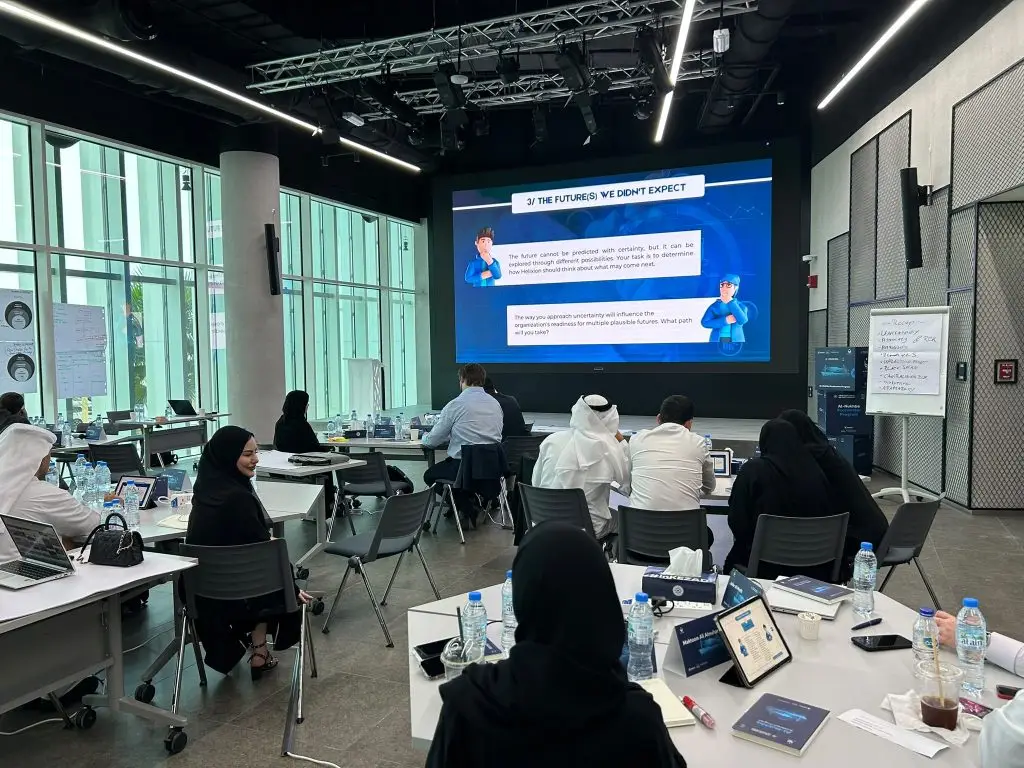
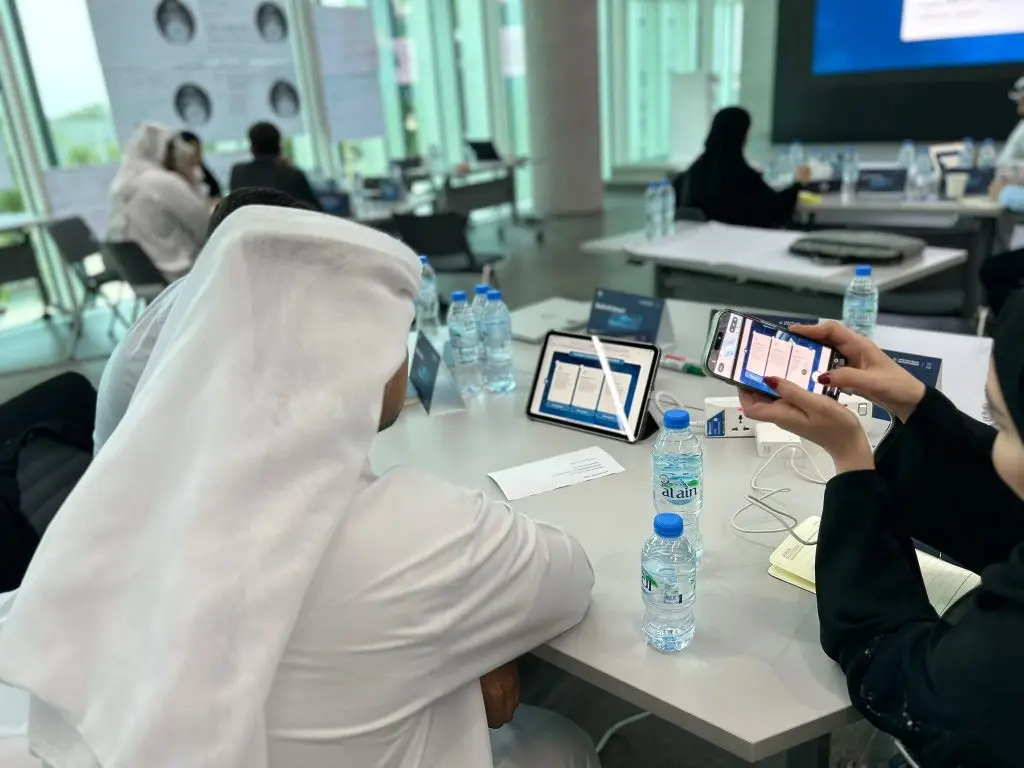
HORIZN places participants in situations where information is incomplete and there is no obvious correct answer.
Leaders must interpret emerging information, decide what matters, make trade-offs, and commit resources despite uncertainty.
The experience helps surface an important reality of senior leadership: waiting for complete certainty can itself become a strategic risk.
Participants therefore explored how to:
Identify early signals of change across markets, technology, regulation, and the wider operating environment
Explore alternative future scenarios and stress-test strategic options
Make strategic decisions under deep uncertainty
Balance near-term performance with long-term positioning
Align leadership perspectives around strategic priorities
Another key theme was the tension between delivering today’s performance and preparing for tomorrow.
Organisations cannot abandon the present in pursuit of distant possibilities. At the same time, focusing exclusively on immediate results can leave them vulnerable to larger shifts taking place around them.
The simulation encouraged leaders to consider strategic choices across different time horizons — protecting today’s business while developing the capabilities, investments, partnerships, and options that may become increasingly important over time.
The objective is not simply to think further into the future.
It is to make better decisions today because you have considered the future more deliberately.
Strategic foresight is also a leadership alignment exercise.
Different leaders often interpret the same external signals differently depending on their function, experience, and assumptions.
By bringing those perspectives into the simulation, HORIZN creates a structured environment for leaders to challenge assumptions, debate priorities, and develop a more shared view of the opportunities and risks ahead.
The conversations generated through the experience are therefore as important as the simulation itself.
They make assumptions visible and create a common language for discussing the future.
Strategic foresight should not end with an interesting conversation about possible futures.
Its value comes from helping leaders make stronger choices in the present.
Through HORIZN, participants experienced foresight as a practical leadership discipline: scanning for signals, exploring uncertainty, challenging assumptions, evaluating strategic options, and aligning around what matters most.
For organisations operating in fast-changing environments, the ability to anticipate change will never eliminate uncertainty.
But it can significantly improve how leadership teams prepare for it.
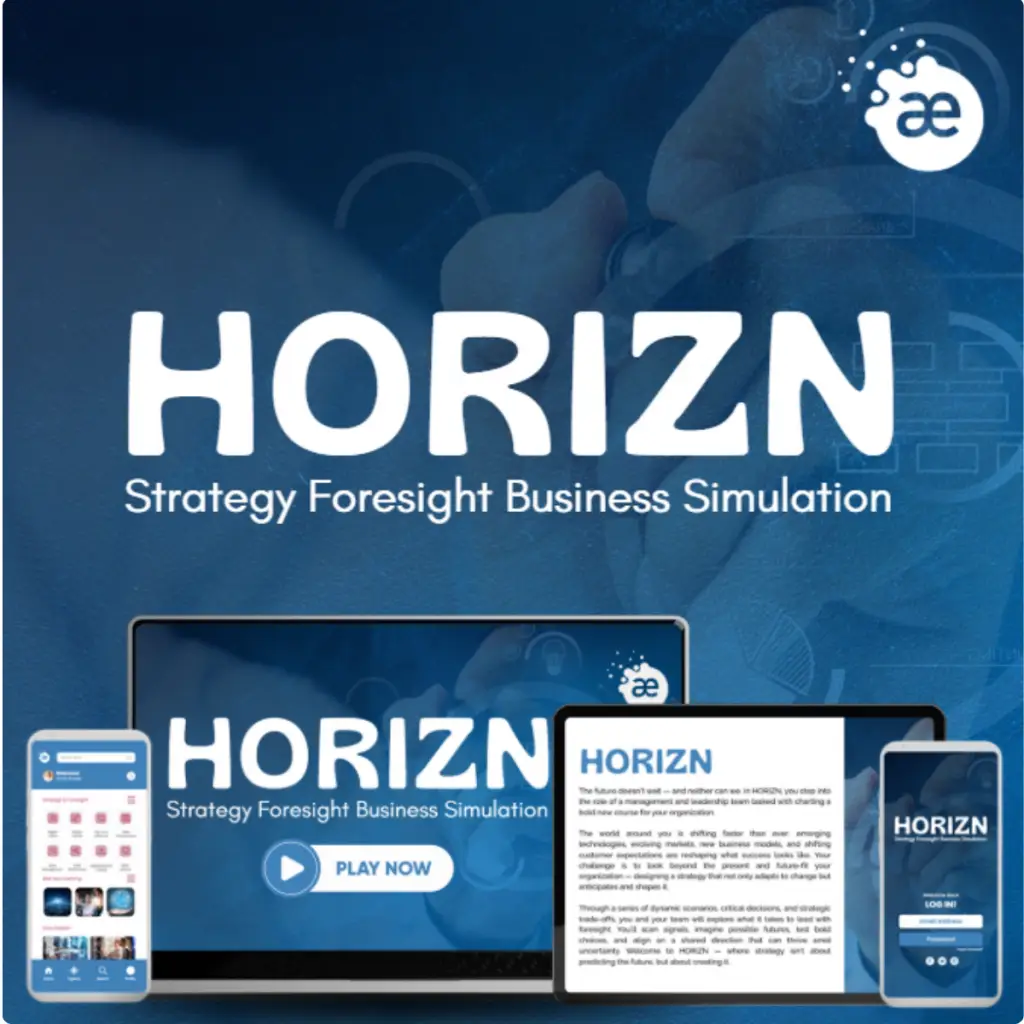
HORIZN is AEQLIA’s immersive business simulation for strategic foresight and future-ready leadership, helping senior leaders explore uncertainty, challenge strategic assumptions, and translate future thinking into better decisions today.
You have questions about simulations or services? We’re here to help! Send us your inquiries, and our team will provide you with all the information you need.
© All Rights Reserved Aeqlia Pte Ltd 2026