Delivered at the Lee Kuan Yew School of Public Policy
The Lee Kuan Yew School of Public Policy is an autonomous graduate school of the National University of Singapore, established in 2004, dedicated to educating and training public policy and governance professionals across Asia.
Qatar has committed itself to a national transition. The Third Qatar National Development Strategy, running to 2030, sets out to move the country to a diversified knowledge-based economy driven by innovation and productivity rather than hydrocarbons alone. Strategies of that scale are written at the top and delivered in the middle, which makes change leadership a national capability rather than a corporate one.
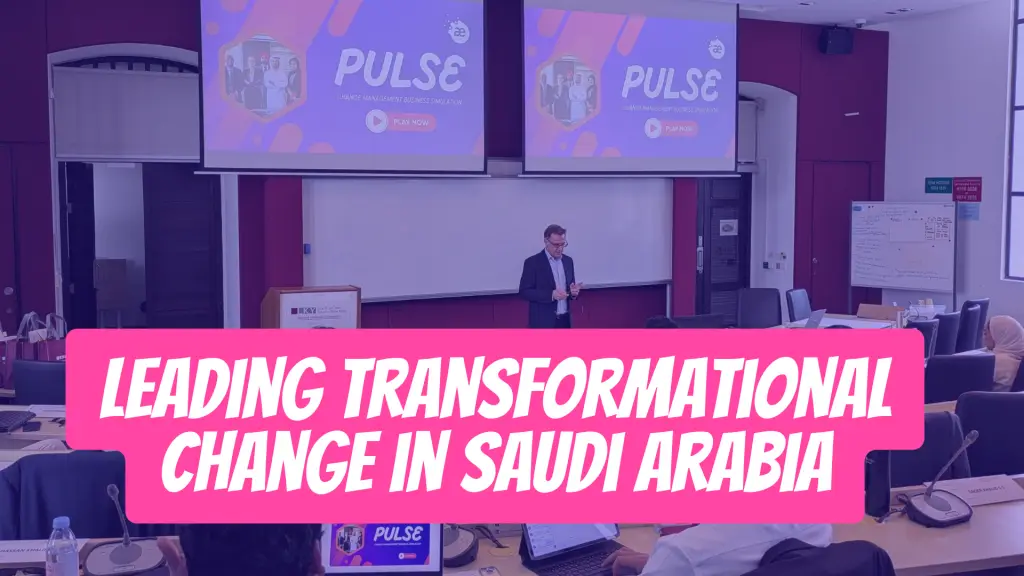
Forty young students from Qatar spent five days at the Lee Kuan Yew School of Public Policy. The programme included a session titled Leading Transformational Change in the Business World and in Qatar, facilitated by Tom Gleave and built around the PULSE change management simulation. The design was sequential by intent: lead a transformation inside a company first, then apply the same model to Qatar’s own national goals.
The session opened on a distinction that framed everything after it. Change leaders work two dimensions at once: the change process across a company or a government, and the people who have to live through it.
The organisational dimension demands a whole-system view. Strategy comes first; structures, processes, people and rewards are then built to serve it. Sound organisational change — and sound organisational design — is a matter of keeping those elements aligned.
The human dimension demands an honest account of how people react. Aversion to change is predictable, and the success or failure of any change effort rests mainly with people. A perfect roadmap fails if people do not come with it. Put plainly, the job is less about managing a plan than managing people through one.
Four principles carried forward into the simulation:
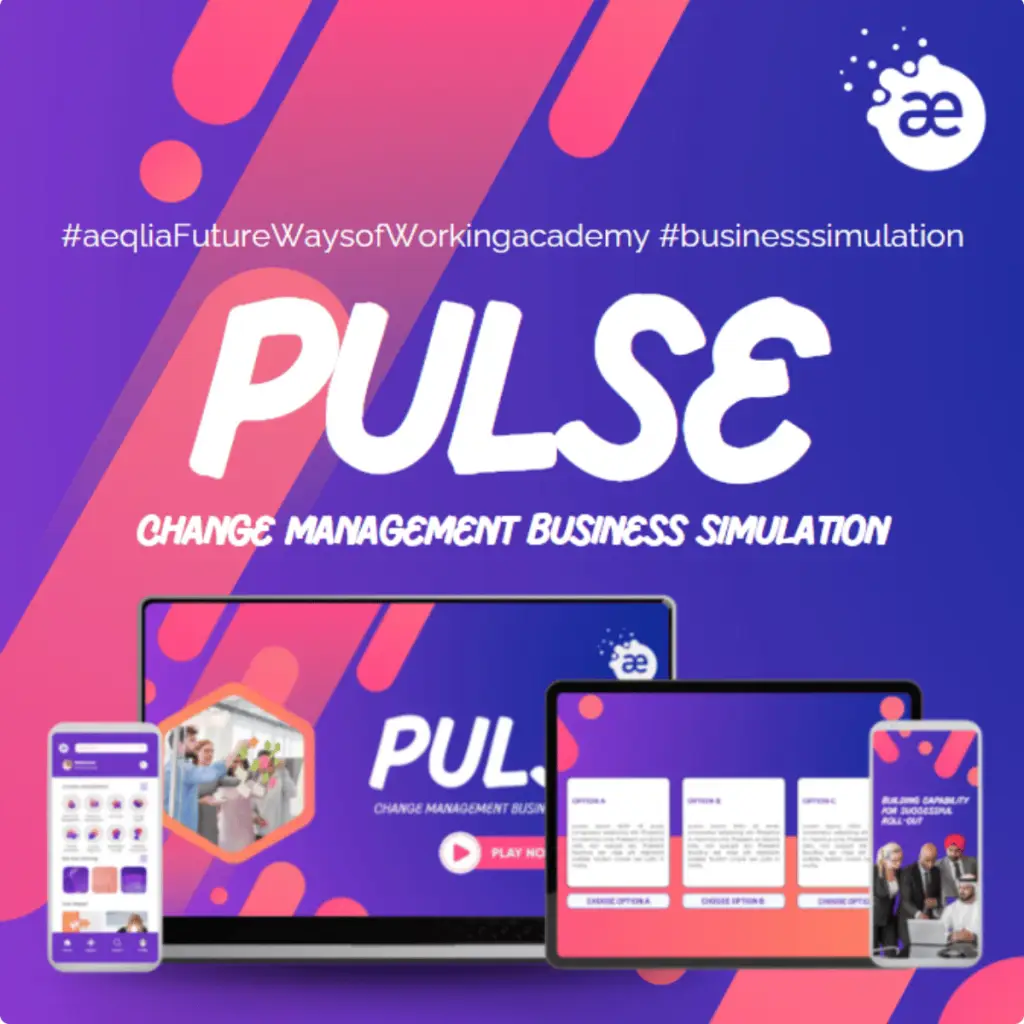
PULSE puts participants in the role of external change consultants to SwiftRoute, a logistics provider that has served clients across the Middle East and Southeast Asia for over 30 years. Industry digitisation, new regulations and shifting client expectations have made enterprise-wide change unavoidable. The mandate to the consulting team is explicit: work directly with SwiftRoute’s CEO through eight change scenarios, and secure the level of transformation the company needs to remain viable in an industry that is itself transforming.
Each scenario runs to the same discipline. The CEO raises a high-priority issue. The team interrogates it and identifies three options for how to proceed. The team commits to one. Only then does the simulation set out the pros and cons of all three, alongside a real-world case study of an organisation that faced the same decision.
Every decision moves three KPIs set by the CEO:
The three resolve into a single Change Future-Fit Index, graphed as the teams progress, which shows whether a transformation effort is accelerating, stalling or reversing. Tom Gleave debriefed each scenario in turn.
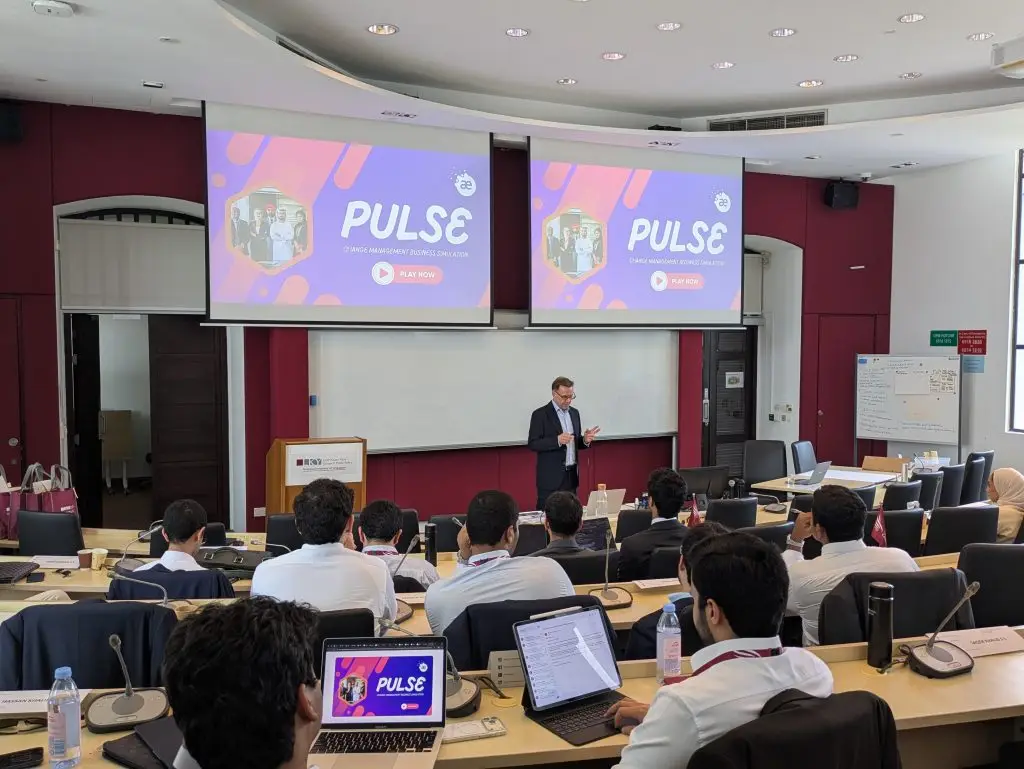
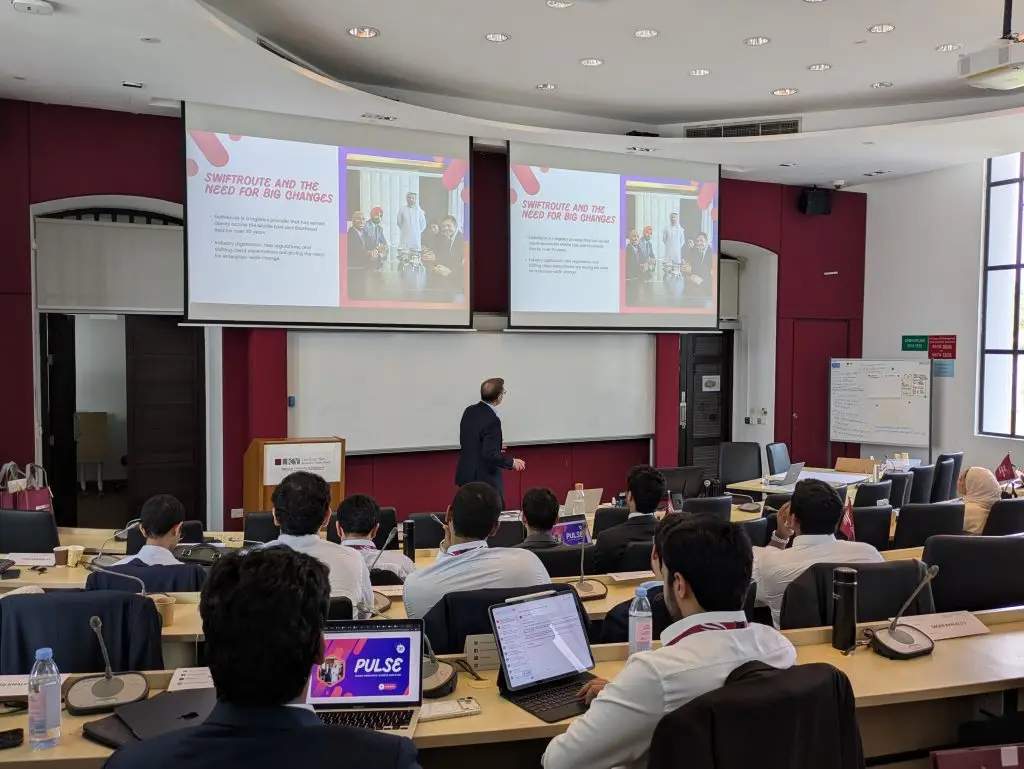
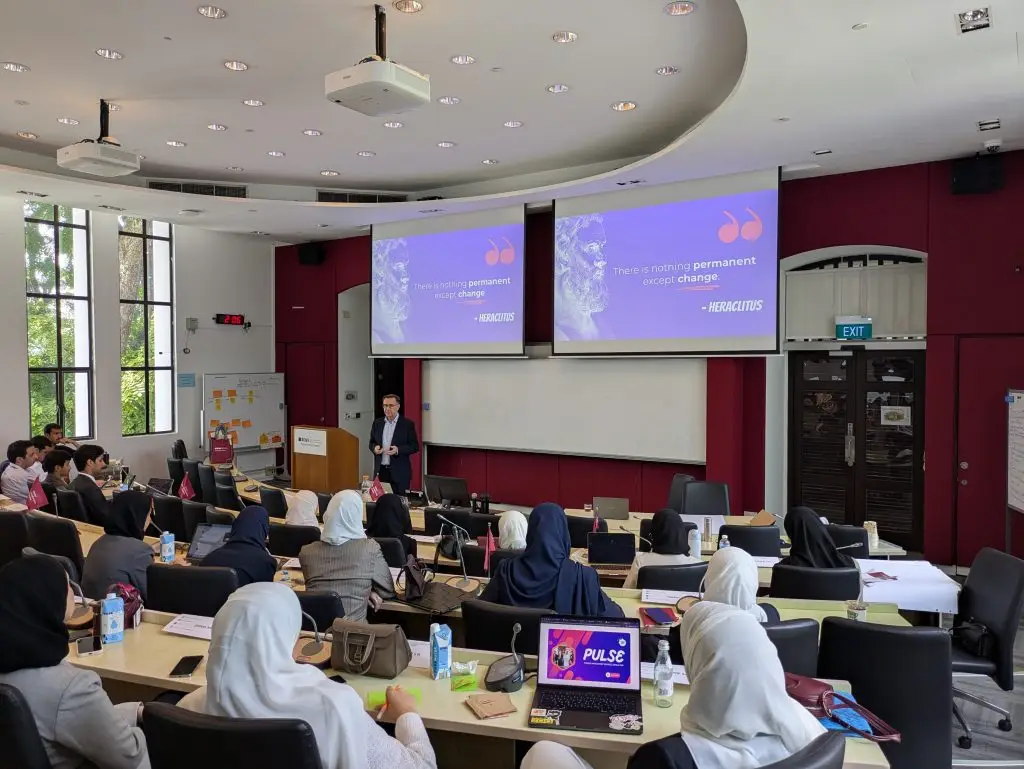
The scenarios follow a transformation from its earliest warning signs to the point where new behaviour either holds or gives way:
The sequence follows the Kotter model. Each debrief set the team’s decision against a real organisation that had faced the same situation — DBS Bank, Emirates Group, ADNOC, Singapore Airlines, Aramex, Etihad Airways, SATS and Saudi Aramco.
The session then moved from SwiftRoute to Qatar. NDS3, covering 2024 to 2030, aims to transition the country to a diversified knowledge-based economy driven by innovation and productivity, not hydrocarbons alone.
National change is typically more complex than corporate change, not less. Authority may be clear at the top, but delivery still runs through a range of often siloed bureaucracies working to different policy priorities. Timelines extend across years or decades. Success is measured in national sustainability and quality of life, not quarterly profit.
Qatar’s case for change is a matter of record. By 2023 the country was facing:
NDS3 responds with seven strategic national goals: Sustainable Economic Growth, Fiscal Sustainability, Future-Ready Workforce, Quality of Life, Environmental Sustainability, Cohesive Society, and Government Excellence.
With the goals on the table, the session put a single question to the room: measured against the Kotter model, how is Qatar doing?
Teams then resumed the consultant role they had held inside the simulation. Each selected one national goal and built a change plan against the Kotter model — simple, ambitious, and adapted to a government and policy context rather than lifted from a corporate one, with alignment risks tested through the Star Model. Plans went up on flipcharts and through three rounds of gallery walks, so every team had its thinking reviewed and challenged by the others before the session closed.
The session closed on eight lessons:
You have questions about simulations or services? We’re here to help! Send us your inquiries, and our team will provide you with all the information you need.
© All Rights Reserved Aeqlia Pte Ltd 2026